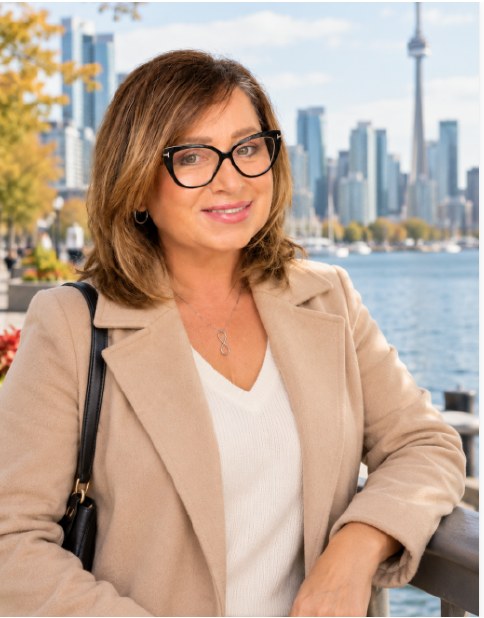
Między Integracją a Tożsamością: Doświadczenia Polonii w Kanadzie
„Emigracja nie zmienia miejsca zamieszkania. Zmienia sposób, w jaki człowiek rozumie samego siebie.”
In June 2026, Małgorzata (Margaret) Holec, President of the Polish Canadian Arts Institute and co-host of What’s Up Windsor on CJAM 99.1 FM, delivered a conference presentation at the John Paul II Catholic University of Lublin as part of „Organizacje polonijne i polskie za granicą” (Polish and Polish-diaspora organizations abroad).
Drawing on more than thirty years of life in Canada, Margaret spoke about what she calls the „emigration tax” — the quiet, ongoing cost of building a life between two languages, two cultures, and two versions of oneself. She organized the idea into five parts: a language tax, paid in the daily effort of working in one language while feeling and dreaming in another; a cultural tax, the small but constant distance of missing the shared references — the childhood candy, the cartoon, the inside joke — that bind people who grew up in the same place; a relational tax, the slow realization that old friendships continue without you while new ones, built without a shared past, take their place; a tax on success, the unseen cost of starting over professionally and having to prove, twice as hard, what you had already earned; and finally, an identity tax, the ongoing work of passing a language and culture on to children who call Canada home from the very start.
She reflected on Canada’s multicultural model as a genuine gift — a country that doesn’t ask newcomers to dissolve into a single mould, but invites them to bring their heritage along. And she closed with a reframing of her own identity: not simply an immigrant who arrived, nor simply an emigrant who left, but a migrant — someone who carries motion itself, with an identity more like a river than a fixed point on a map.
„Być migrantką nie znaczy być człowiekiem bezdomnym, rozdartym i nieszczęśliwym – wręcz przeciwnie.”
“Being a migrant doesn’t mean being homeless or torn apart — quite the opposite.”
She closed by thanking the organizers and her audience, and spoke of returning to Poland, with pride, carrying the richness of a life lived between two worlds.
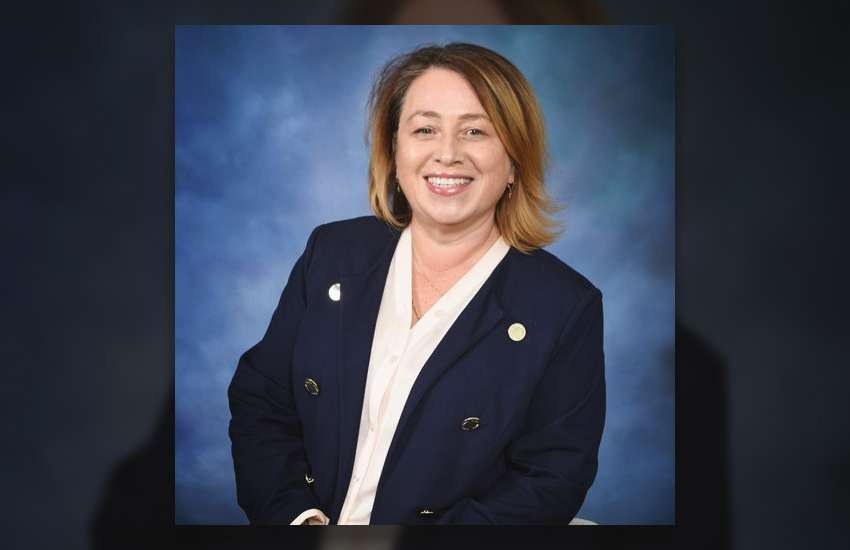
A Full-Circle Story: From ESL Student to Award-Winning Teacher
When Margaret Holec arrived in Canada from Poland 35 years ago, she barely spoke English. Her path into the language began in an ESL classroom at St. Clair College — the same institution that, decades later, featured her story as one of its own.
From that first ESL class, Margaret went on to complete St. Clair’s Nursing program and worked as a nurse. But teaching kept calling her back. Having trained as a teacher in Poland, she eventually made the leap: she left nursing to become an ESL instructor herself, determined to give newcomers the same confidence she once found in that classroom.
Today, Margaret teaches ESL at the Unemployed Help Centre’s Hub of Opportunities and has spent roughly two decades helping newcomers build their English and their confidence alongside it. In November 2025, that work was recognized with a ‘Sparks of Excellence’ Award from the Teachers of English as a Second Language (TESL) Association of Ontario, honouring her dedication to learners, colleagues, and the broader community.
She has also volunteered with TESL Windsor since 2025, serving as vice president and president, and has founded a youth group for newcomer children — alongside her role co-hosting What’s Up Windsor on CJAM 99.1 FM.
Reflecting on the award and the path that led to it, Margaret described the journey simply as coming full circle — from arriving unable to find the words, to now helping others find theirs.